
Abstract blue geometric background with layered angular shapes

Explore peer-reviewed studies, technical notes, and posters that show how spatial and multimodal data can reveal mechanisms, guide decisions, and accelerate discovery.

News & Blogs for advancing spatial insight

Featured Article

News & blogs

See how research teams use Weave to align modalities, analyze multicellular environments, validate mechanisms, and compare cohorts with reproducible workflows.

clear filters
Thank you! Your submission has been received!
Oops! Something went wrong while submitting the form.
Blog Post

Spatial omics 4 - Antibody visualization: from microscopy to mass spectrometry

Following on from the last blog, so you're doing immunohistochemistry and want to know how to view it? Here's our overview entry on the different methods involved.
Exploratory Analyses
Targeted Analyses
Cell-cell interactions
Blog Post

Spatial omics 3 – proteomics with immunolabelling

In this entry, we delve into the OG spatial proteomics technique - immunohistochemistry.
Pathway Analyses
Targeted Analyses
Blog Post

Spatial omics 2 – Mixing Modern Methods mit Microscopy

Continuing the series of blogs on spatial omics, let's look at how ye olde histology techniques aid and are being integrated into modern omics.
Exploratory Analyses
Cell-cell interactions
Cell segmentation / typing
Blog Post

Spatial omics part 1: the history and how of histology

In this series of blogs, we address different aspects of spatialomics and spatial multi-omics, a rapidly emerging field that looks at molecular markers of cells and tissues in a spatial context. To understand the importance of spatialomics, we have to understand Histology, right at the birth of modern medicine.
Exploratory Analyses
Cell segmentation / typing
Blog Post

Recap - ASMS 2022

After a pause of two years, the annual American Society for Mass Spectrometry (ASMS) meeting has come and gone. Now that we’ve recovered from the joy of reconnecting with everyone in person again, here’s a recap of what Aspect Analytics presented at Minneapolis in 2022.
Other
Blog Post

MSI applications part 4: drugs and small molecule metabolites

In this blog post we look at the use of mass spectrometry imaging for investigating small molecules such as drugs and metabolites and then a quick overview of different metabolomic MSI studies and some challenges facing this area but also tools that can help you with your drug metabolite study.
Pathway Analyses
Blog Post

MSI applications part 3: lipids

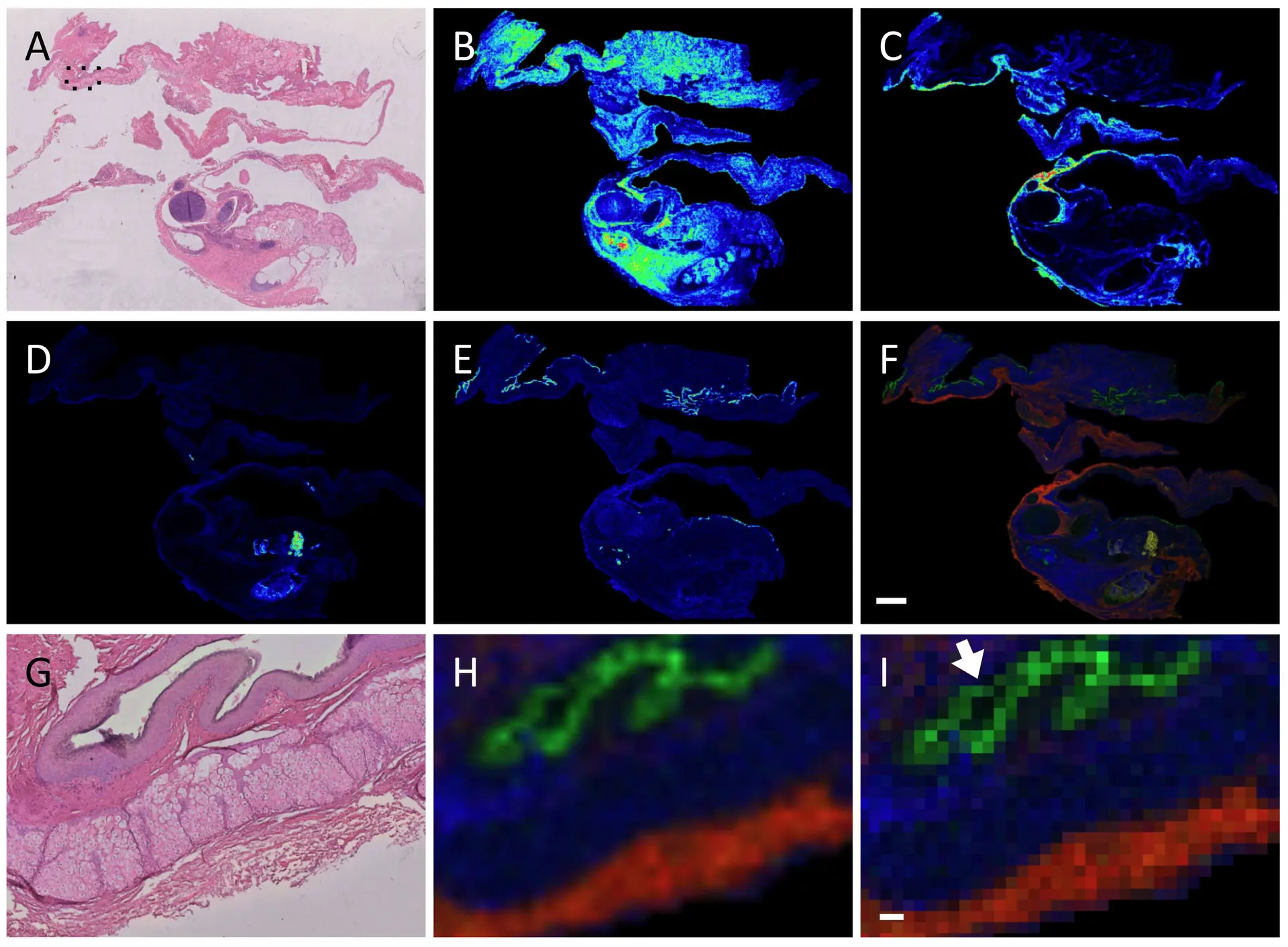
In this blog post we explore lipid imaging with mass spectrometry, particularly the technical considerations, applications, and limitations.
Pathway Analyses
Exploratory Analyses
Targeted Analyses
Blog Post

MSI applications part 2: peptides and proteins

In this blog post we go back to the roots of mass spectrometry imaging, and describe its first breakthrough application on biological samples: analyzing the spatial distribution of proteins and peptides in tissue.
Targeted Analyses
Blog Post

MSI applications part 1: glycans

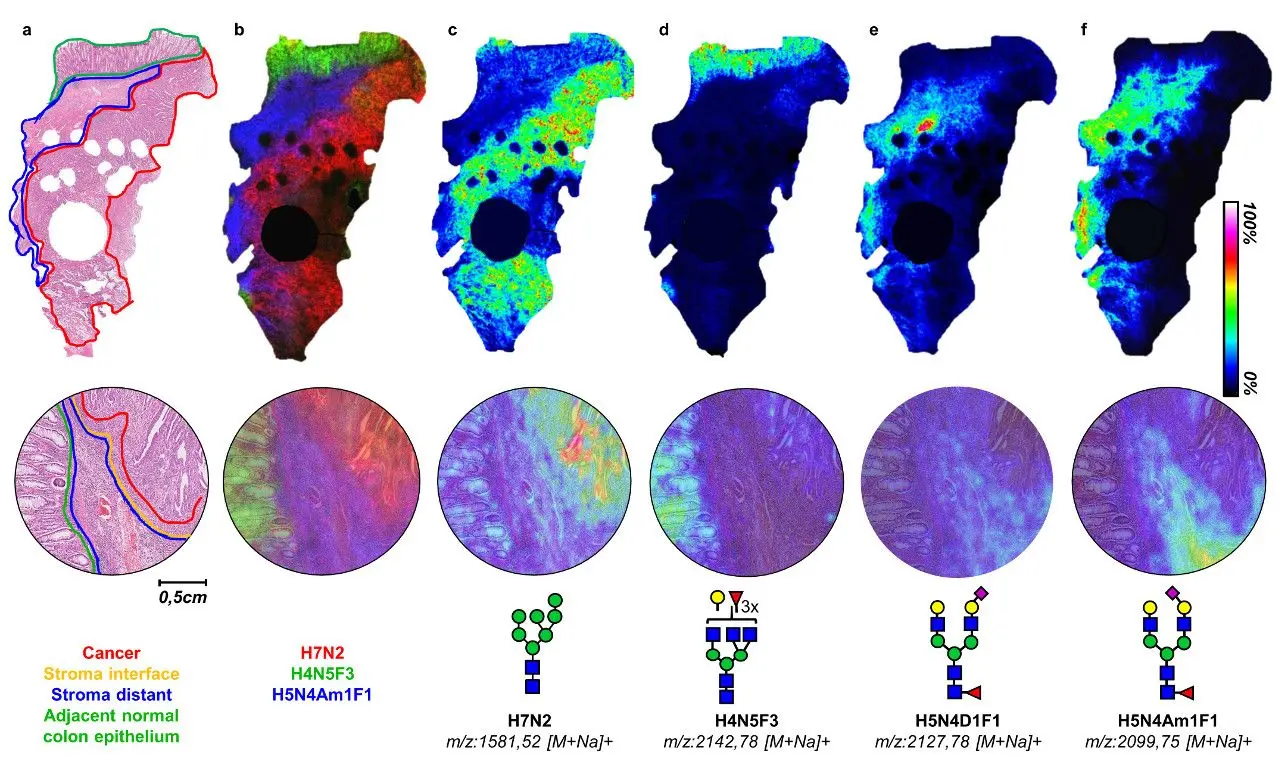
In this blog post we introduce you to the wonderful world of glycans, an interesting analyte for which mass spectrometry imaging is proving to be particularly powerful.
Targeted Analyses
Pathway Analyses

FAQs

Understanding Weave®, spatial biology, and multimodal analysis

Still have questions?

Does Weave support collaboration across teams and projects?

Weave supports multi-user, multi-team projects. With our shareable and compliant workspaces, different team members can collaborate in real-time on the same datasets in one governed workspace. Biologists, pathologists, computational biologists, and data leaders can interactively visualize and explore the same measurements and derived results, for both single and multi omics datasets. True democratization of spatial biology insights.

Can Weave be operationalized at the enterprise level?

Yes. Weave is enterprise-ready – not only do we have ISO 27001 and ISO 27018-certified data security and handling of PII, but also SSO integration with industry-standard federated authentication servers. In addition, we have scalable storage and computation resources with hosted and on-premise deployment options with SDK and CLI interfaces for systems integration. Our users routinely manage up to petabytes of spatial biology and associated data within Weave.

Can I see examples of published work using Weave?

Yes. Browse our publication section above to explore peer-reviewed studies, application notes, posters, and collaborative projects demonstrating how Weave supports spatial and multimodal research across disease areas.

How do I know if Weave is right for my project?

If your research involves tissue architecture, spatial biomarkers, spatial multi-omics integration, PK/PD readouts, or mechanistic interpretation, Weave provides a reproducible and scalable analytical framework. You can start with a single study and expand to multi-cohort programs.

Is it possible to automate recurring analyses?

Yes. Using the Weave SDK, our team can help you integrate your in-house pipelines, build reusable workflows, visualization modules, or reporting templates to reduce manual work and support high-throughput projects.

Can Aspect Analytics help if we don’t have internal computational resources?

Yes. Aspect Analytics offers data analysis services from our expert team who have over a decade of experience in spatial bioinformatics and data analysis. Weave is entirely cloud-based, so you don’t need local processing power or specialized infrastructure to analyze spatial multi omics data. Taken together, our team can remotely support you with study-level data integration, cellular neighborhood analysis, workflow development and more, while your teams access the results and reusable workflows directly in the cloud. This collaboration keeps your projects moving even without in-house computing or engineering support.

How does Weave support translational and drug development teams?

Weave enables spatial PK/PD analysis, MoA exploration, responder vs. non-responder comparisons, and more. The platform produces deeper insights, and makes it easy to interpret and share across preclinical and translational groups. By providing a collaborative and secure environment, Weave turns massive, multi-modal spatial datasets into actionable insights to accelerate your drug discovery and development pipelines.

What makes Weave different from other spatial analysis tools?

Weave provides the computational foundation to unify and analyze data across the multiple layers of spatial biology, histology, and metadata. It supports multimodal co-registration, comparative cohort analysis, model-ready outputs, and custom workflow development, bringing clarity to complex spatial data. Weave is also certified against the ISO 27001 and ISO 27018 standards for information security and handling of Personally Identifiable Information (PII).

What kinds of biological questions can Weave help answer?

Weave is used to explore cell-cell interactions, cellular neighborhoods & spatial niches, ligand–receptor communication, PK/PD and drug distribution, pathway activity, and tissue-level mechanisms that drive disease progression or therapeutic response. Weave enables finding spatial and/or molecular signatures indicative of disease status, treatment response, etc.

How does Weave help with multi-site or multi-cohort studies?

Weave standardizes quality control, spatial alignment and integration, and lineage tracking across sites, batches, and instruments. This creates reproducible, comparable datasets that support biomarker discovery, patient stratification, and translational analysis.

Can I integrate data generated outside of Weave?

Yes. External transcriptomics, proteomics, MSI, or histology annotation files can be ingested and integrated. You can also load data that has been preprocessed using your in-house pipelines, or cell segmentation results from a pipeline you have optimized for your use-case. This lets you build complete, multi-layered datasets even when parts of the workflow happen elsewhere.

Can Weave analyze data from different platforms or vendors?

Yes. Aspect Analytics is vendor-neutral and works with all major spatial biology technologies. Supported platforms include Xenium, Visium, CosMx, COMET, PhenoCycler, IMC, assorted microscopy vendors, MALDI and DESI-MSI, and more. Core capabilities of Weave include analysis of large-scale projects using single or a limited number of spatial assays, or cross-platform harmonization across different modalities for comprehensive multi-omic characterization.

Do I need advanced computational expertise to use Weave?

No. Biologists, pathologists, and computational scientists can all work within Weave. The Weave GUI supports visual analysis without coding, while the Weave SDK allows computational users to extend workflows or build custom analyses.

What kinds of data can I analyze with Weave?

Weave software supports histology, spatial transcriptomics, spatial proteomics, multiplex imaging, mass spectrometry imaging (MSI), and complementary single-cell omics at scale. These layers can be aligned, harmonized, and compared within one governed analytical backbone.