
Abstract blue geometric background with layered angular shapes

Spatial data is drastically accelerating biological discovery, 

changing our perception of biology.

Pharma: Maximize insights from your spatial biology experiments

Not sure which solution fits?
Let's discuss!
Why Pharma teams choose Weave®

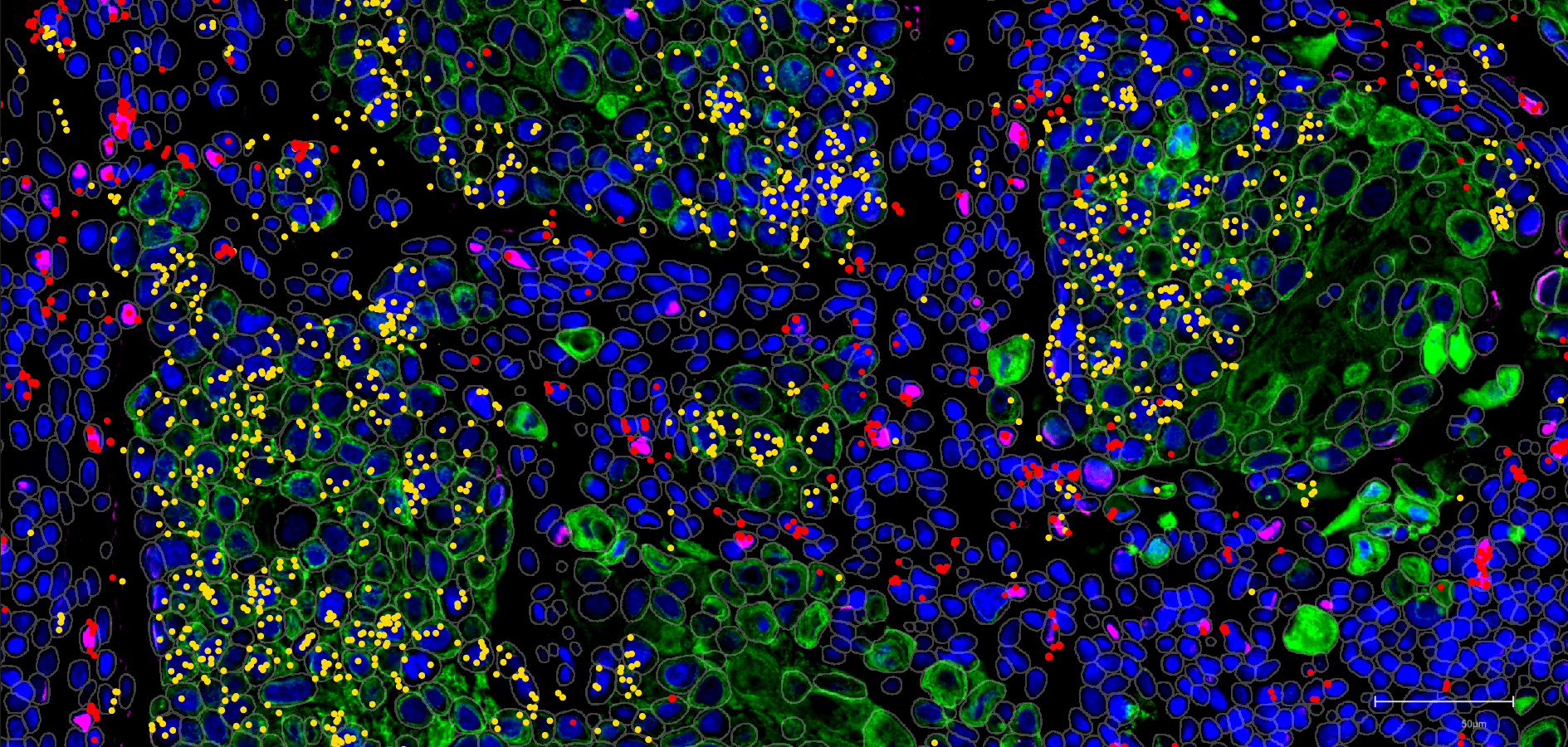
Our platform integrates spatial multi-omics with histology and single-cell data in one governed analytical layer to unravel complex tissue biology and empower multidisciplinary teams. Give your insights the home they deserve

What Weave delivers

One platform for all stakeholders

Pathology, biology, computational biology, and AI teams work on the same governed dataset. Weave streamlines collaboration through rich visualizations, extensible data analysis pipelines, and deep integration into your existing workflows, across single-cell and multicellular views.

Vendor-neutral end-to-end analysis and integration

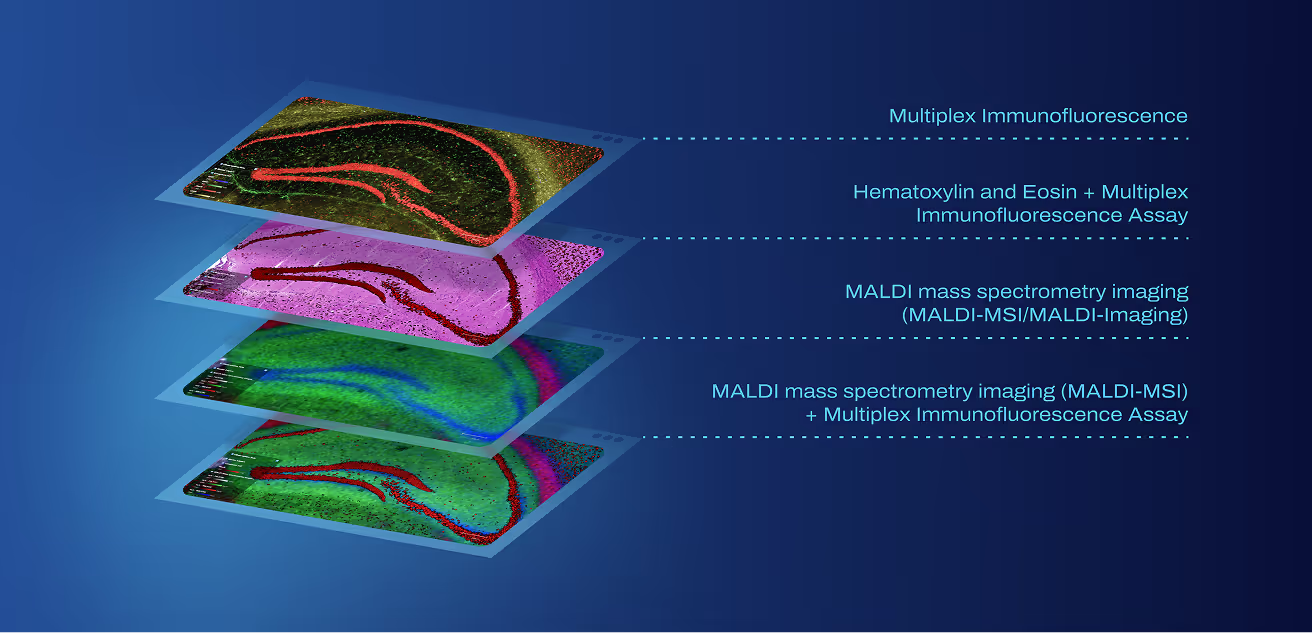
Fuse your spatial transcriptomics, proteomics, metabolomics, mass spectrometry imaging (MSI), histology, and metadata from any source into one analytical asset. Works with your existing tools and infrastructure for digital pathology, LIMS, data catalogs, cloud environment, and computational pipelines.

Trusted insights

Apply QC workflows, provenance, versioning, and model-ready outputs that scale across studies to create high-quality governed datasets with lineage tracking, centralized documentation and flexible access control.

Reusable, governed datasets

Insights compound as cohorts grow and externalize. Deploy results back into your tools via UI or SDK/APIs and control sharing across stakeholders without data duplication.

Layered scientific imaging techniques of brain tissue with colored microscopy views

Proven at
enterprise scale

Supports oncology, immunology, neurodegenerative and other programs

Used from target discovery to translational research

Trusted by the majority of top 10 pharma (including Merck, GSK and BI)

70% faster for integrated results (from 4+ months down to 3 weeks)

Powers studies involving 100s of TB of data and 100M+ cells across multiple modalities

Enables collaboration and data reuse across globally distributed teams

ISO 27001:2022 compliant

"The Aspect Analytics team has a deep understanding of spatial multi-omics data analysis challenges…We had difficulties combining and visualizing results from different spatial-omics modalities…these were solved with user-friendly tools that allow us to maximize information extraction and aid our understanding of mechanism of action for drug molecules."

- Reid Groseclose, Director - Cellular Systems Imaging, GSK 

"Leveraging spatial multi-omics in the early phases of drug discovery is a game-changer for accelerating novel target and tissue biomarker efforts. As a pathologist, I really appreciate applications like Weave from Aspect Analytics, which provides intuitive and rigorous tools to explore and integrate spatial transcriptomics and spatial proteomics datasets with traditional pathology imaging. Like a google map microscope, Weave allows us to navigate the tissue multidimensionally and explore spatial relationships at depth. It is helping elevate our understanding of the pathobiology of disease to the next level!"

- Silvia Siso, DVM, MS, PhD, Sr Ppal Scientist-Pathologist, Abbvie

Medical professional using tablet in blue-tinted laboratory setting
insights

Check out some of our joint publications

Research Papers

White paper - Xenium in situ analysis and reproducibility study of multiple carcinomas via an end-to-end spatial multi-omics platform.

This white paper is an independent study conducted in collaboration with BioChain Institute Inc. examining the reproducibility of the Xenium spatial transcriptomics platform from 10X Genomics.
Research Papers

Toward Omics-Scale Quantitative Mass Spectrometry Imaging of Lipids in Brain Tissue Using a Multiclass Internal Standard Mixture

This paper demonstrates an approach for conducting quantitative mass spectrometry imaging (MSI) of lipids directly from brain tissue sections. This greatly expands the utility of MSI for spatial lipidomics.
Research Papers

Quantitative MALDI Imaging of Aspirin Metabolites in Mouse Models of Triple-Negative Breast Cancer

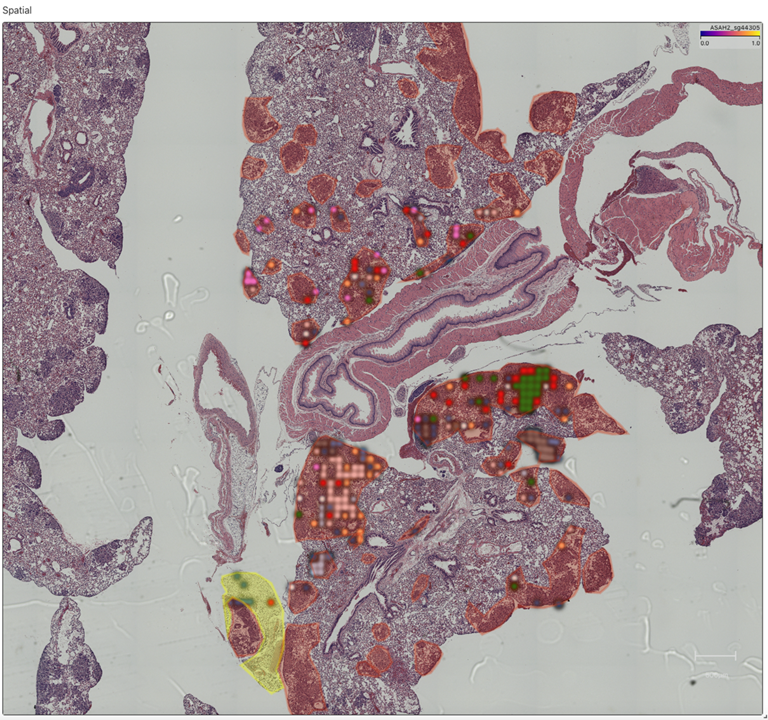
This study refined quantitative MALDI imaging (QMALDI) to map aspirin metabolites, especially salicylic acid (SA). Precise spatial alignment, integration, and quantification of QMALDI, histology, and immunofluorescence images allowed accurate evaluation of the spatial distribution of SA in tissue regions, and helps with the further development of aspirin as an activatable MRI contrast agent.

Request a demo or run a multicellular cohort analysis with our team

Abstract digital artwork with colorful organic shapes on dark blue background