Insights and Interpretability: The Next Steps in Spatial Biology
Spatial biology produces stunning images, but the field now needs to turn them into biological decisions. Drawing on GEN’s recent feature, we explore why interpretability is the toughest barrier, why multi-omics integration is key to building evidence, and how Weave® helps translate high-plex discoveries into routine histology signatures.

TL;DR
- Spatial biology has changed how we study tissue by keeping cellular and subcellular context intact, but a pretty picture on its own isn’t enough. The field now needs to turn spatial data into biological decisions.
- GEN’s recent feature identified four barriers to routine use in biopharma (speed, reliability, cost and interpretability). The first three are largely engineering problems, while interpretability depends on building evidence to establish which spatial signatures are relevant.
- No single omics layer can tell the whole story, so integrating different assays is key to building that evidence.
- Weave® supports this by integrating data from any spatial platform, enabling comparison of findings across studies through atlases, and helping translate high-plex discoveries into signatures that can be measured in routine histology.
We know that cells in tissue behave differently depending on where they are, the microenvironments they occupy, and the molecular gradients they experience. Until recently, researchers were required to homogenize samples for bulk measurements or dissociate and isolate cells for single-cell analyses in order to gain omics-level understanding of tissues. This is no longer needed with spatial biology, and the preservation of cellular and subcellular context has rapidly changed how we study tissues in development and disease – going beyond defining cell populations and moving towards mapping tissue neighborhoods.
But what’s next? Recent years have seen a proliferation of spatial biology platforms encompassing transcriptomics, proteomics, metabolomics, lipidomics etc, with increasing plex and detection capabilities. As humans, we all enjoy a pretty picture, but as scientists, that is not enough. The picture has to lead to biological decisions - to ask sharper questions, provide reasonable answers, support hypotheses and/or lead to better follow up experiments. So the question the spatial biology field is grappling with now is “what comes after that?”
In GEN's feature, Spatial Biology Moves Toward Translation, representatives from different spatial biology instrument vendors were asked about how they saw the field’s progression, remaining barriers, and what would be needed for transformation into a routinely used tool. In this blog, we will address what has been identified as the current and future challenges facing the spatial biology field, and how Weave® by Aspect Analytics addresses them.
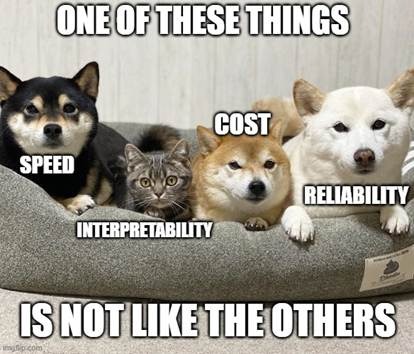
Four barriers, but one of these things is not like the others
Spatial biology is moving from basic research toward translation, but Kamila Belhocine of 10x Genomics identified “speed, reliability, cost, and interpretability” as four barriers that still prevent routine use in biopharma. Belhocine regards the first three as engineering challenges: spatial assays must run fast enough for everyday workflows, consistently enough to scale and cheaply enough for large studies. In contrast, interpretability is more difficult as it depends on building evidence and validating which spatial signatures are meaningful and actionable.
Weave addresses the question of interpretability at multiple levels:
1. A platform for testing patterns at scale. Patterns in spatial biology won’t show up until data is acquired at scale and preferably across multiple omics layers. As a cloud-based platform, Weave’s compute and storage resources are scalable with study size. The platform also contains a suite of QC tools so that users know that the observed patterns are real and not artifacts.
2. Turning hypotheses into insights. Weave’s insights generation tools, such as cellular neighborhoods, ligand–receptor interactions, and differential expression, convert raw spatial structure into specific, testable claims. These can be mapped to a drug-development question, such as which genes mark the niche that drives disease or which features separate responders from non-responders.
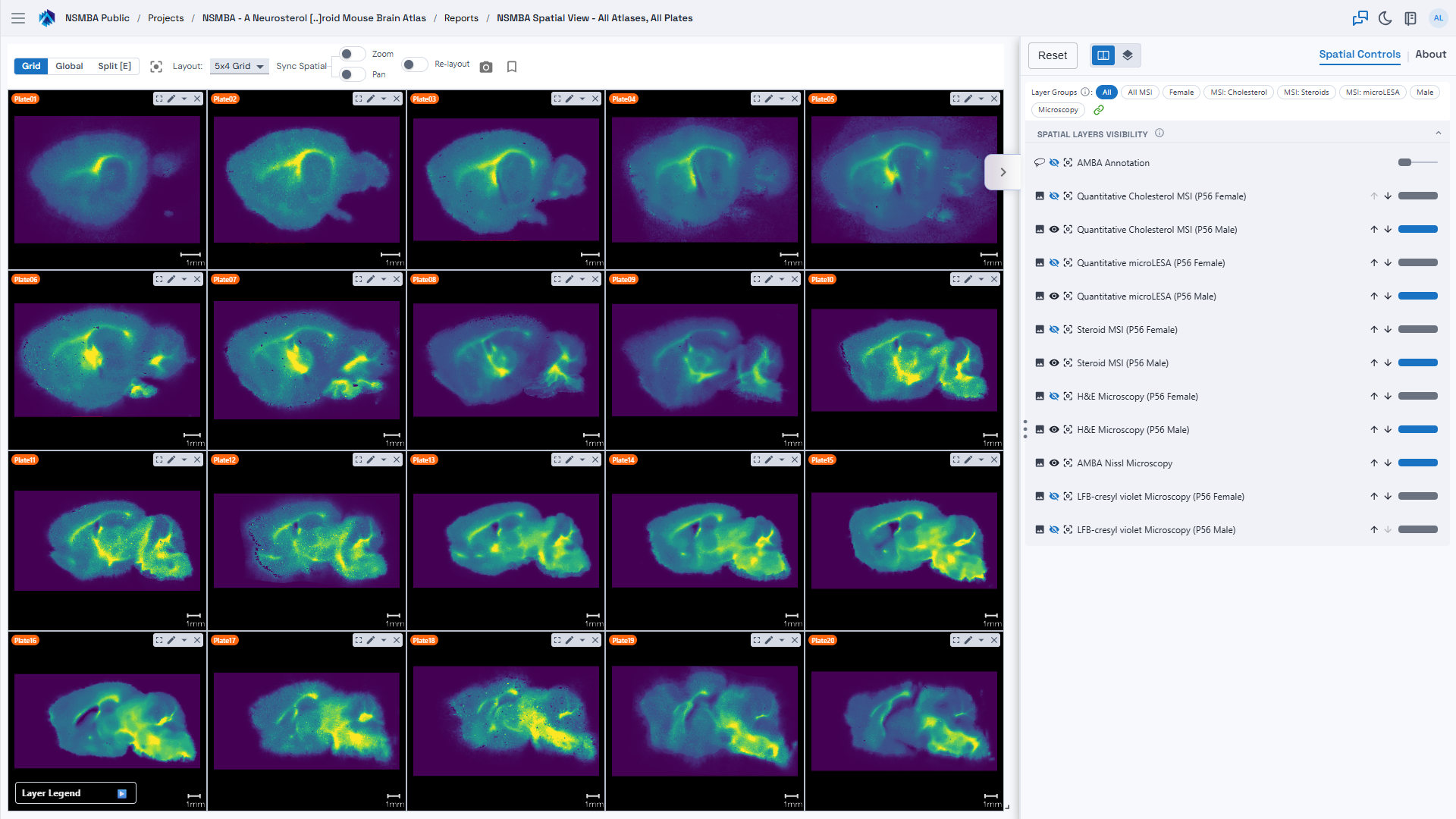
3. Atlases for accumulated evidence. A signature from one study is a hypothesis; it only becomes evidence by recurring across studies. Weave can be used for creating atlases where derived insights can be findable, comparable and reusable across studies.
4. Keeping evidence reusable. Results stay FAIR, ontology-tagged and lineage-tracked. Later studies can find and build on earlier ones instead of starting over.
Integration: because no single omics level can tell the whole story
Other voices in the same piece point to integrating modalities for building that layer of evidence. Gary Latham, Bio-Techne CTO, argues that understanding tissue means seeing where genes and proteins are expressed, how they relate and how they interact within tissue architecture. Senior director of product management at Bruker Spatial Biology Thomas Campbell agrees that since biology is multi-dimensional, the field needs complementary, fit-for-purpose technologies to connect across DNA, RNA, protein and cellular function.
As a summary of the different commercially available spatial biology technologies:
- Histology provides morphology, indicating where tissue architecture differs and gives pathology a visual framework, but usually provides limited insight into molecular mechanism.
- Targeted spatial transcriptomics and multiplexed immunofluorescence spatial proteomics (mIF) provides cellular and subcellular context. It is powerful when markers are known and the question depends on cell identity, cell state, or neighborhood organization.
- Spatial metabolomics, lipidomics, and glycomics via mass spectrometry imaging (MSI) provides insight into tissue phenotype as these molecular classes have important roles in cell function but are not easily predicted from transcript or protein expression.
- Complementary to these omics layers is MSI-based drug and compound imaging. While not an omics, it goes without saying that knowing where a drug is located, whether it made it to the intended site of action, and the effect it has on its local environment is extremely important information.
No single technology can provide insights into all the levels. While some levels can be more easily linked than others, they do not provide a perfect view. For example, spatial correlations between corresponding transcripts and proteins vary depending on the gene, while post-translational modifications, lipids, and metabolites are not directly template-driven by the genome.
Weave is assay agnostic by design. Any commercial spatial biology platform can be analyzed on its own, and our approach to integrating data (stack fusion) can be applied to any combination or number of assays, from data acquired on the same or serial sections.
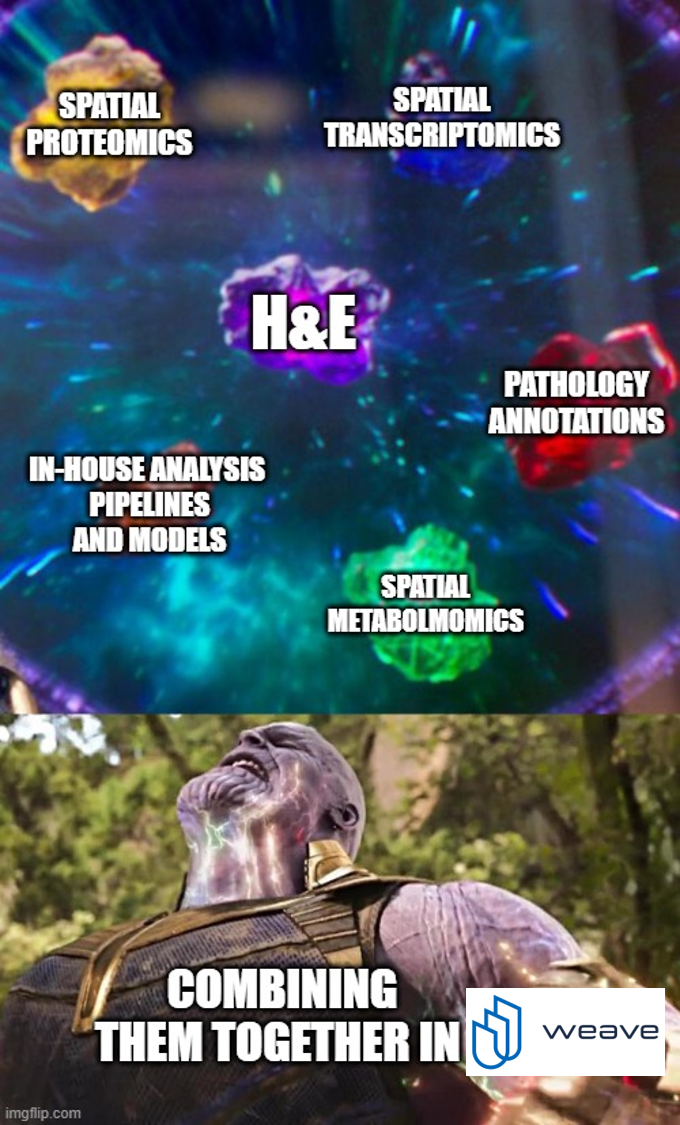
Studies where we have combined different technologies include:
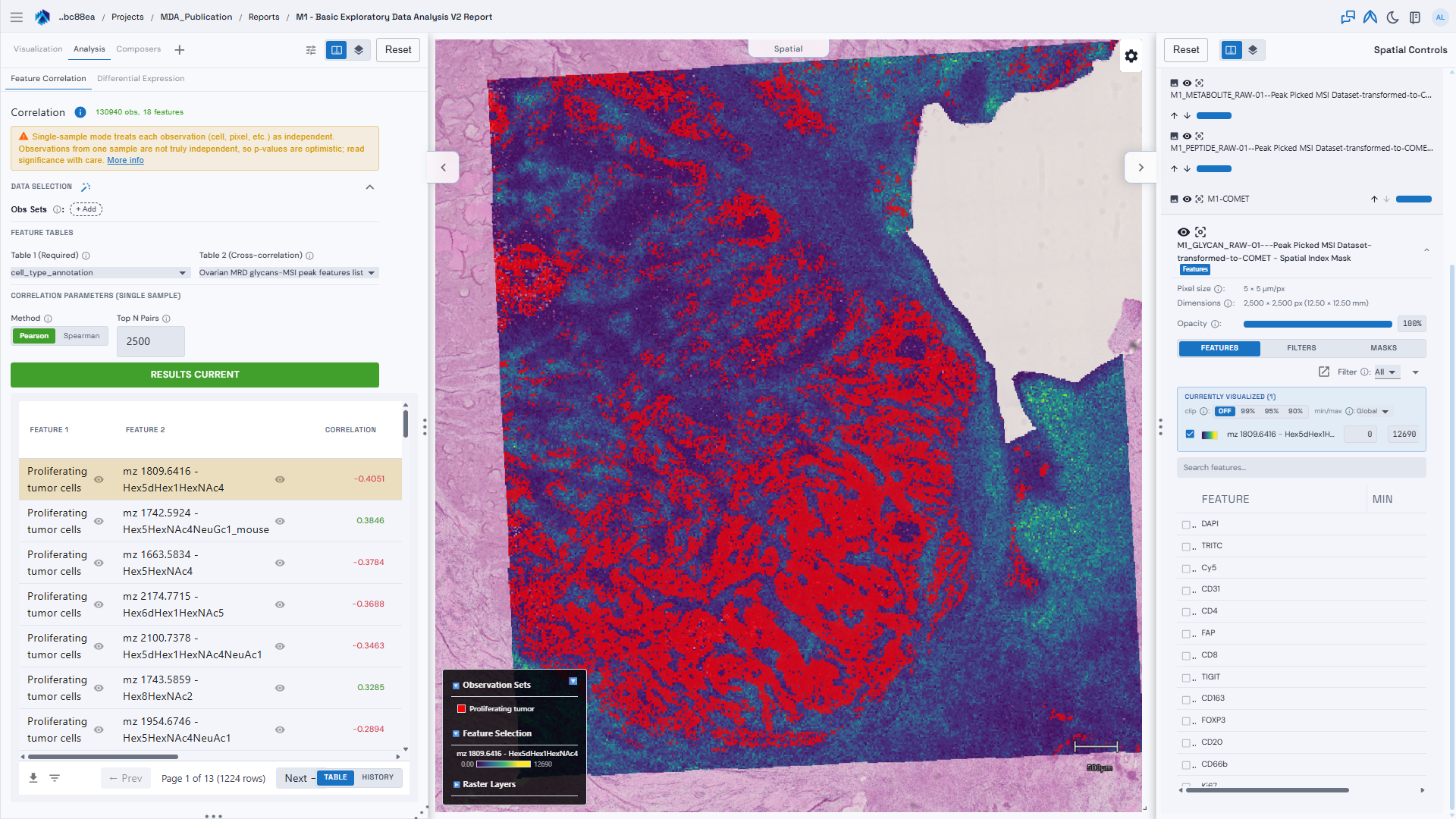
Once layers are fused, users can connect insights such as correlations between different molecular classes, whether a drug reaches the relevant cells and structures, or linking spatial features that separate responders from non-responders to a specific molecular signature.
Translation: from pretty pictures to meaningful markers
Using spatial biology to find actionable molecular signatures is perhaps the real future of the field. Campbell does not see the future of spatial biology in generating more data, but rather in turning high-plex discoveries into focused, reproducible assays that answer clinical questions across many samples. The joy of multiplexing is real, but we need to recognize that more markers does not mean more insight and conclusions. What it often does mean is more acquisition time, which puts high-plex assays out of range for most clinical settings. Quanterix CTO Mike Miller adds that the platforms that stand out will be those that carry a finding from an impressive discovery image to a measurement robust enough for a clinical trial or diagnostics.
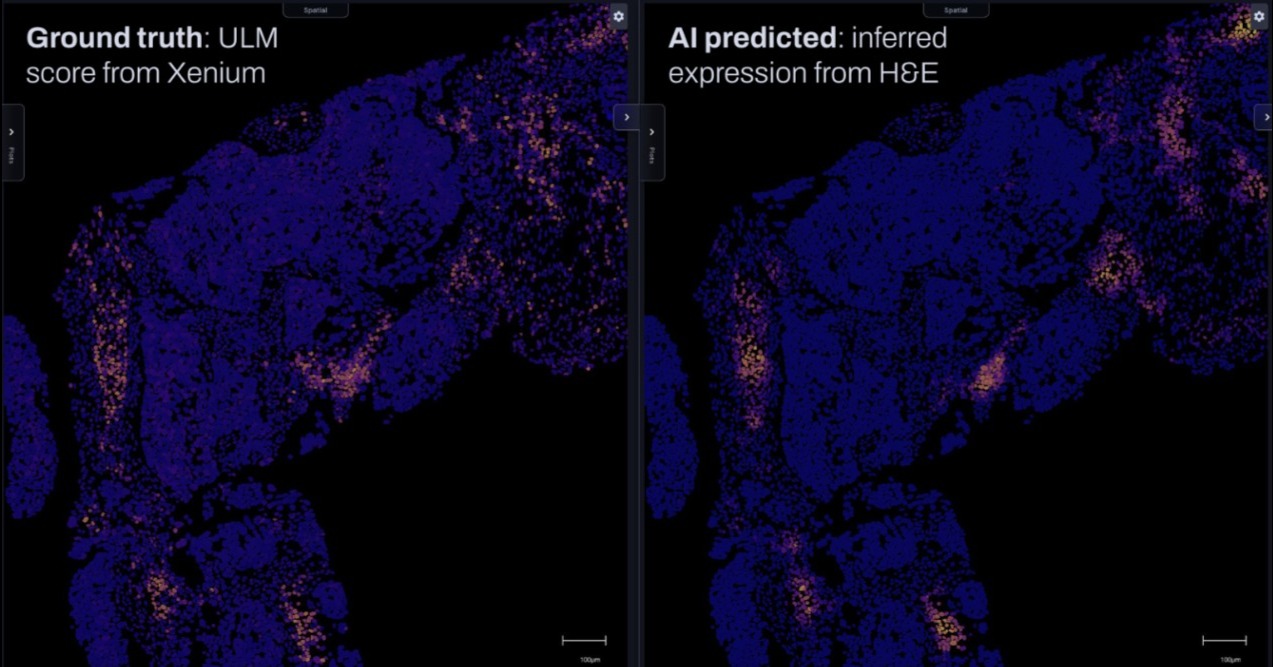
By enabling integration of data from assays such as whole transcriptome analysis or untargeted MSI with low- or mid-plex mIF and H&E, Weave users are in the position to turn high-plex data into a deployable histology signature. In addition, by providing data and metadata management and workflow traceability that adhere to FAIR principles alongside the spatial data, Weave can be used as the infrastructure for generating AI models built on a team's own paired data to infer gene-signature expression directly from routine H&E.
Conclusion
So where does that leave us in taking spatial biology from a fun new technology to an indispensable tool? We can expect spatial assays to keep getting faster, more reproducible and more affordable. Interpretability, however, can’t be solved at the instrument level alone. It depends on generating data at scale, integrating data across modalities, and comparing findings across studies and cohorts. After passing that hurdle, spatial biology can be used for turning a signature from a high-plex discovery experiment into something that can be measured routinely in a clinical setting. That is the problem we built Weave to help with. The pretty pictures will keep coming – and we will keep enjoying them – but their value lies in what they help us learn about biology, and ultimately what they can do for patients.
Want to discuss your own spatial multi-omics projects or learn more about Weave®? Contact our team.