Aspect Analytics at IMSC 2026
From ganglioside biology in Parkinson's Disease to lipid microenvironments in Alzheimer's Disease to gene-metabolite crosstalk in pulmonary fibrosis, our projects presented at IMSC 2026 underscored how the same core capability — integration of multiple spatial modalities — applies across disease areas and imaging technologies.
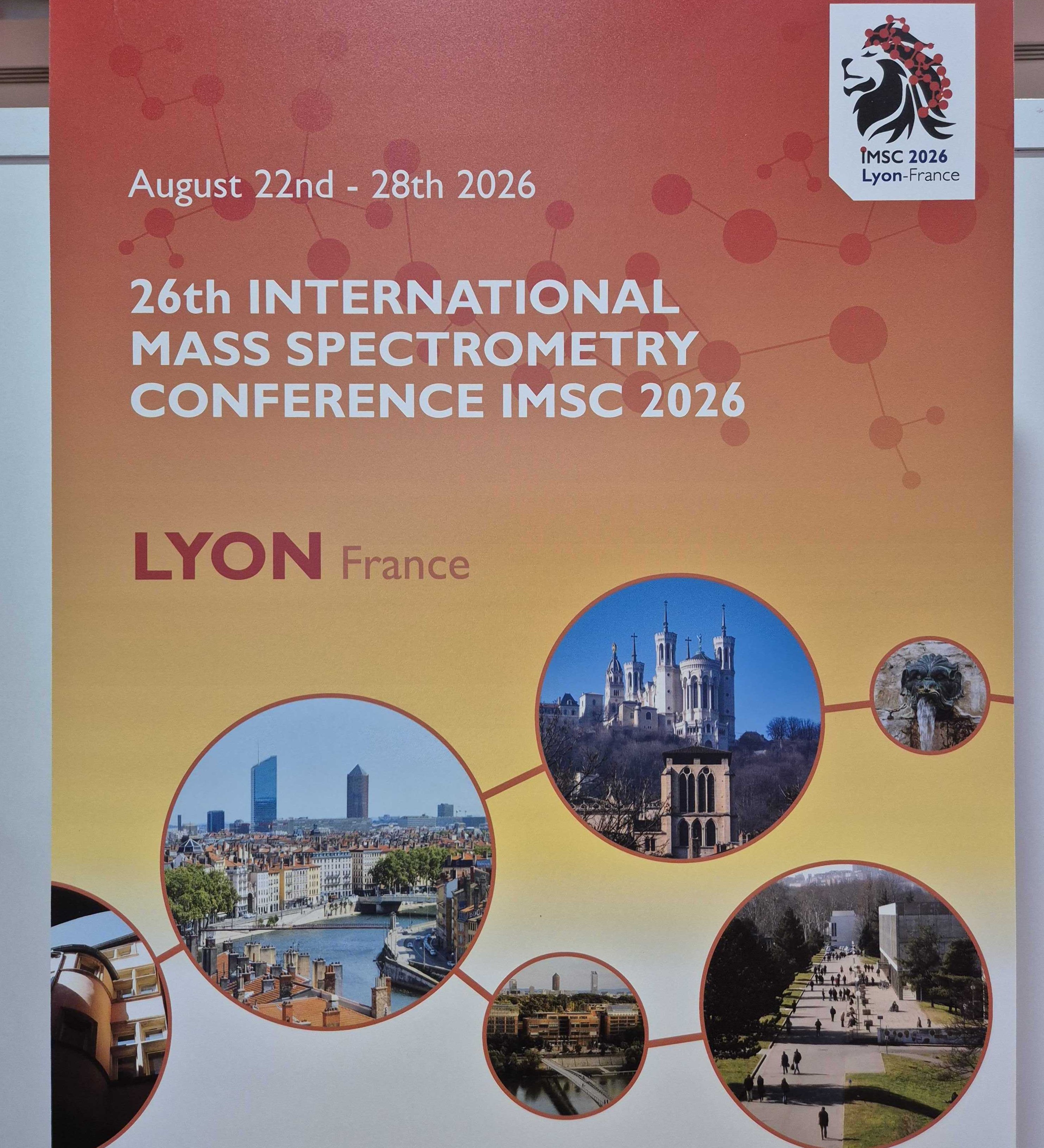
The 26th International Mass Spectrometry Conference (IMSC 2026) brought the global mass spectrometry community to Lyon, France, from August 22–28. Organized by the International Mass Spectrometry Foundation together with the French, German, and Swiss mass spectrometry societies (SFSM, DGMS, SGMS), the meeting drew over 1,500 participants across life sciences, chemistry and materials, environment and energy, and the grand challenges shaping the field.
Aspect Analytics was represented across three co-authored posters this year: two extending our long-running neurodegeneration projects, and a collaboration with pharmaceutical company Boehringer Ingelheim exploring pulmonary fibrosis. Together, they highlight how Weave® supports spatial multi-omics integration across very different disease areas and imaging modalities at scale.
Quantitative Imaging and Characterization of Brain Ganglioside Phenotypes in Parkinson's Disease
This poster presented recent results from our Michael J. Fox Foundation for Parkinson's Research–funded collaboration to IMSC, following on from Kim Ekroos's oral presentation of the same project at ASMS earlier this year. The study, run together with Australian (University of Wollongong, University of Sydney), European (Aspect Analytics, Lipidomics Consulting, UCL Human Tissue Biobanks), and US-based (Merck) partners, maps ganglioside distributions across multiple brain regions in both a mouse model of Parkinson's Disease and human post-mortem tissue — the first application of spatially resolved ganglioside quantification in human brain, and the largest study of its kind to date.
Weave® is used throughout the project to process and integrate MSI spatial lipidomics data with histology images, tissue annotations from pathologists and the Allen Mouse Brain Atlas, and to generate, visualize, and run differential analysis on the resulting ganglioside maps.
Access poster POC_0895 using this link.
Distinct Lipid Profiles of Hippocampal Subregions and Plaque Microenvironments in an Alzheimer's Disease Mouse Model Revealed by High-Spatial Resolution MALDI-Imaging
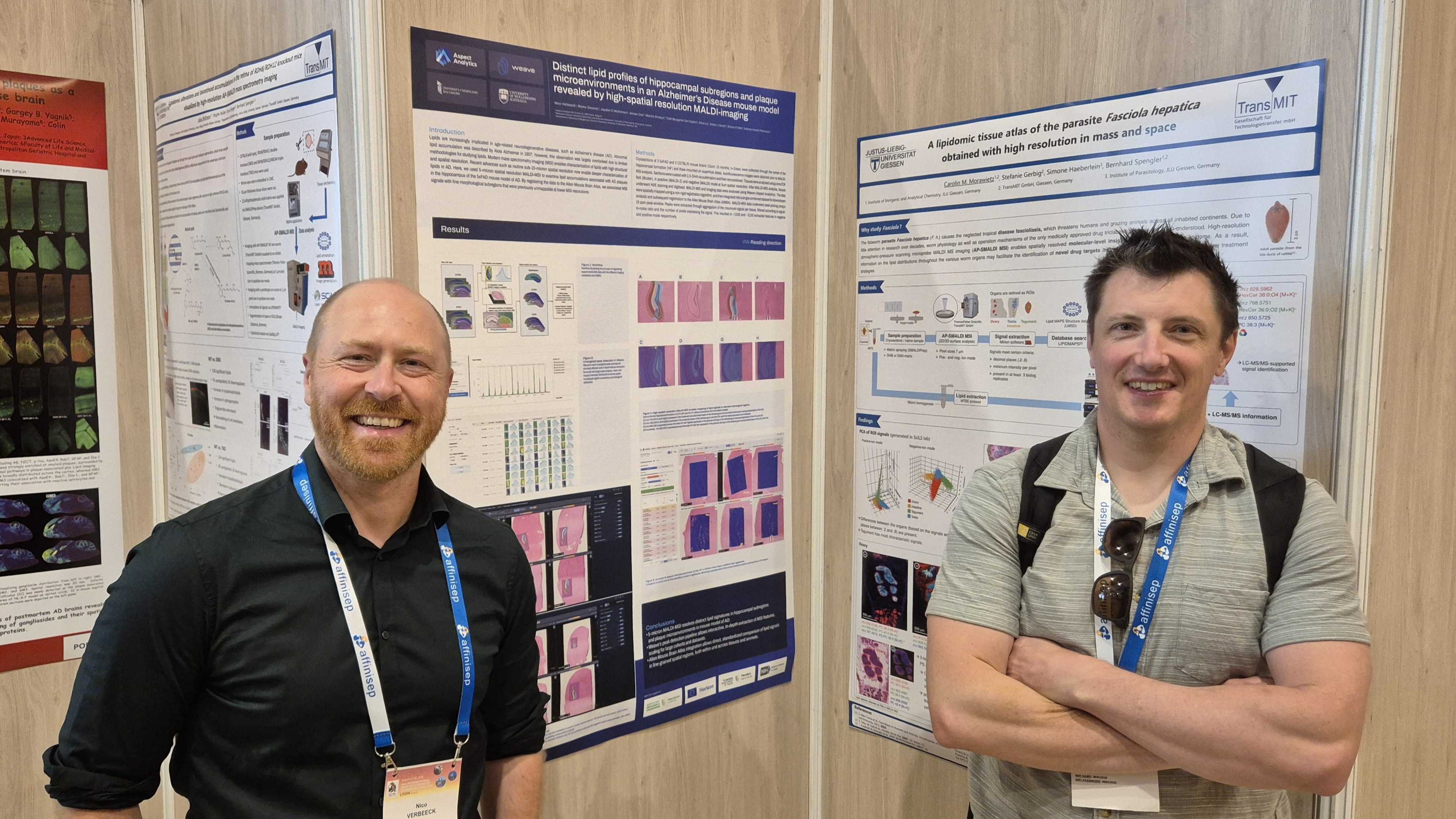
Also presented by Nico, this poster maps lipid signatures onto fine-grained hippocampal structures in a mouse model of Alzheimer's Disease, in collaboration with the University of Maryland Baltimore and the University of Wollongong. Weave's untargeted peak detection pipeline was used to extract MSI signals across the multi-animal, disease-and-control cohort, with visual feedback built in for quality control at every step. Integration with corresponding histology images and annotations from the Allen Mouse Brain Atlas then enabled direct comparison of lipid signals in specific spatial regions, both within individual tissue sections and across the full study.
Access poster POD_0904 using this link
Integrating Spatial Transcriptomics and Mass Spectrometry Imaging to Uncover Gene-Metabolite Interactions in Pulmonary Fibrosis
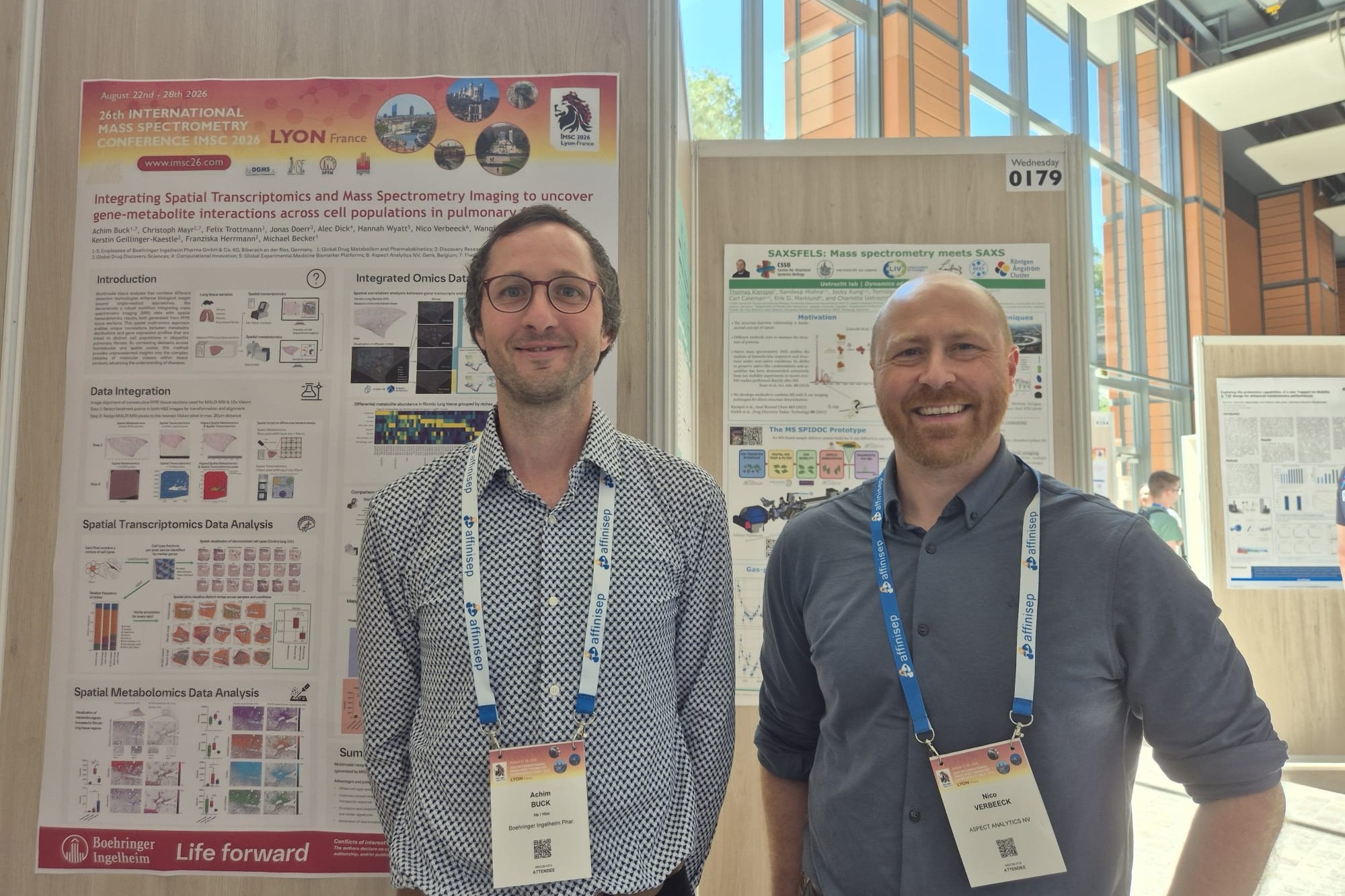
Our third IMSC poster was presented by Achim Buck of Boehringer Ingelheim. This project combined spatial transcriptomics with mass spectrometry imaging to study gene–metabolite interactions across cell populations in pulmonary fibrosis. In this disease, the spatial organization of fibrotic niches is central to understanding progression. By layering spatially-resolved transcript and metabolite data onto the tissue architecture, it was possible to investigate how gene expression programs in specific lung microenvironments relate to the local metabolic and lipid landscape. Weave® supported the spatial integration of the transcriptomics and MSI datasets, bringing both modalities into a shared frame of reference for downstream analysis.
Access poster POA_0177 using this link
Contact us if you have questions about any of these studies, want to learn more about Weave, or want to discuss your own spatial multi-omics projects!
Images © 2026 Aspect Analytics. All rights reserved.