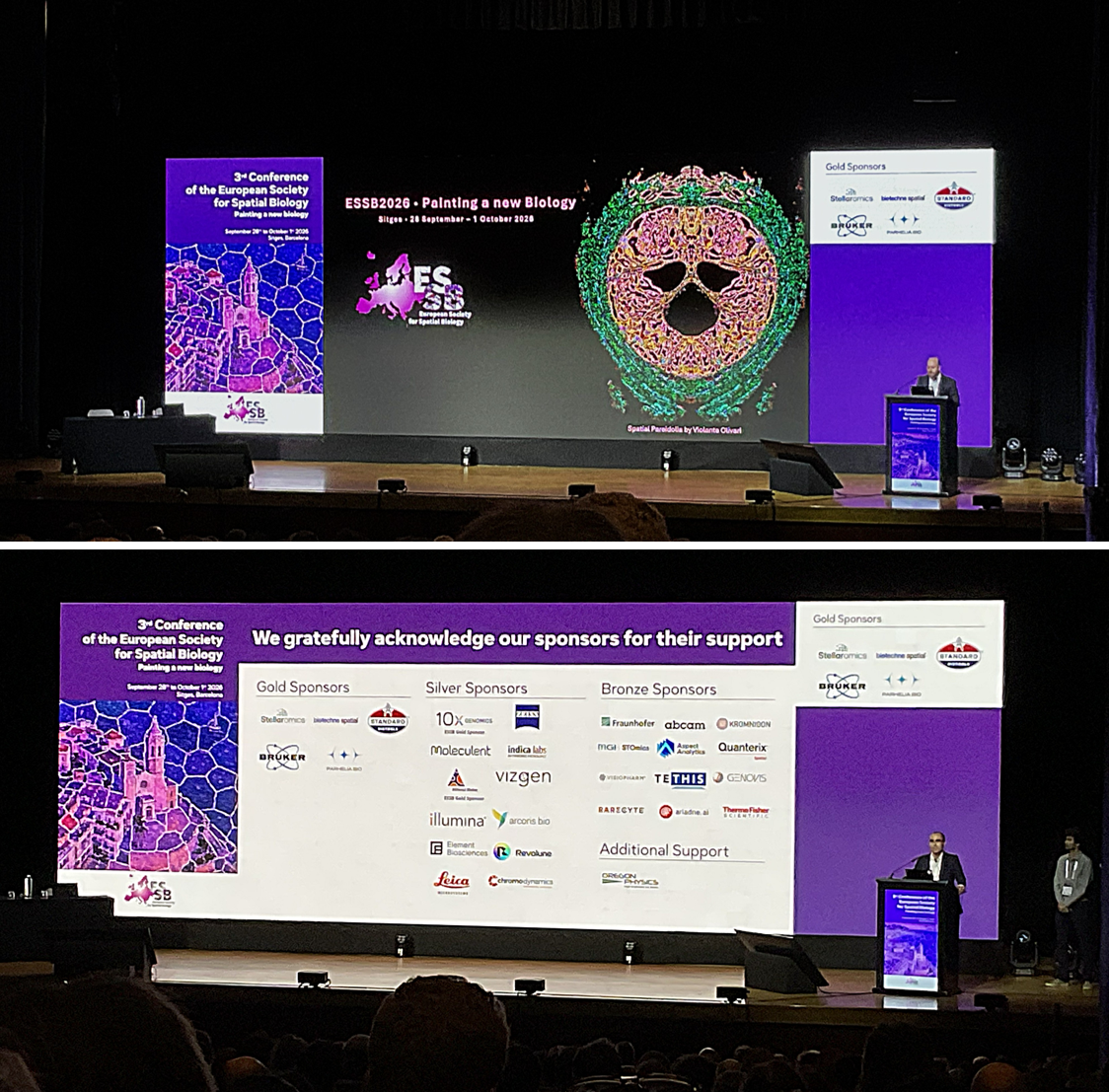
Conference recap - Aspect Analytics at ESSB 2026
Aspect Analytics exhibited at ESSB 2026 in Sitges, where about 700 attendees gathered for four days of talks and posters on the theme of spatial biology. Our two co-authored posters used Weave® to integrate multimodal spatial data and map tumor-immune niches in triple-negative breast cancer and renal cell carcinoma.
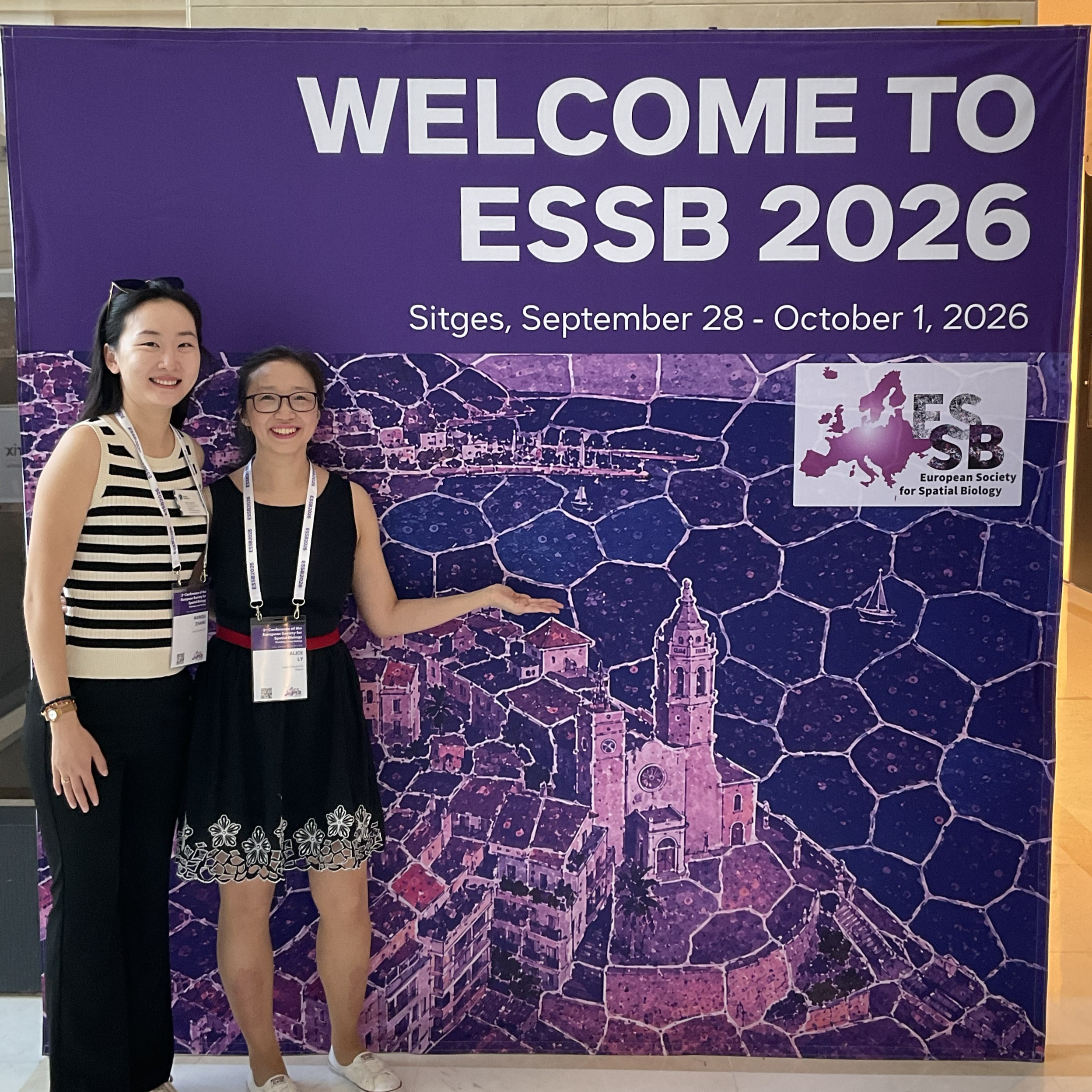
The 3rd Conference of the European Society for Spatial Biology (ESSB 2026) took place in Sitges from September 28 to October 1, under the theme "Painting a New Biology". Aspect Analytics is proud to continue our support of this conference by exhibiting at the meeting, co-authoring multiple poster presentations, and catching up with different members of the spatial biology community!
The ESSB is a young society and its annual conference has expanded quickly in just three editions. In just a few years, ESSB has grown into the leading European community dedicated to Spatial Biology. With approximately 700 participants spanning academia, industry, and clinical research, ESSB 2026 returned as a four-day, in-person meeting with invited, short, and flash talks, plus 360 posters spread across three sessions. The growth of the conference reflects both the remarkable growth of ESSB and the increasing impact of Spatial Biology across the life sciences.
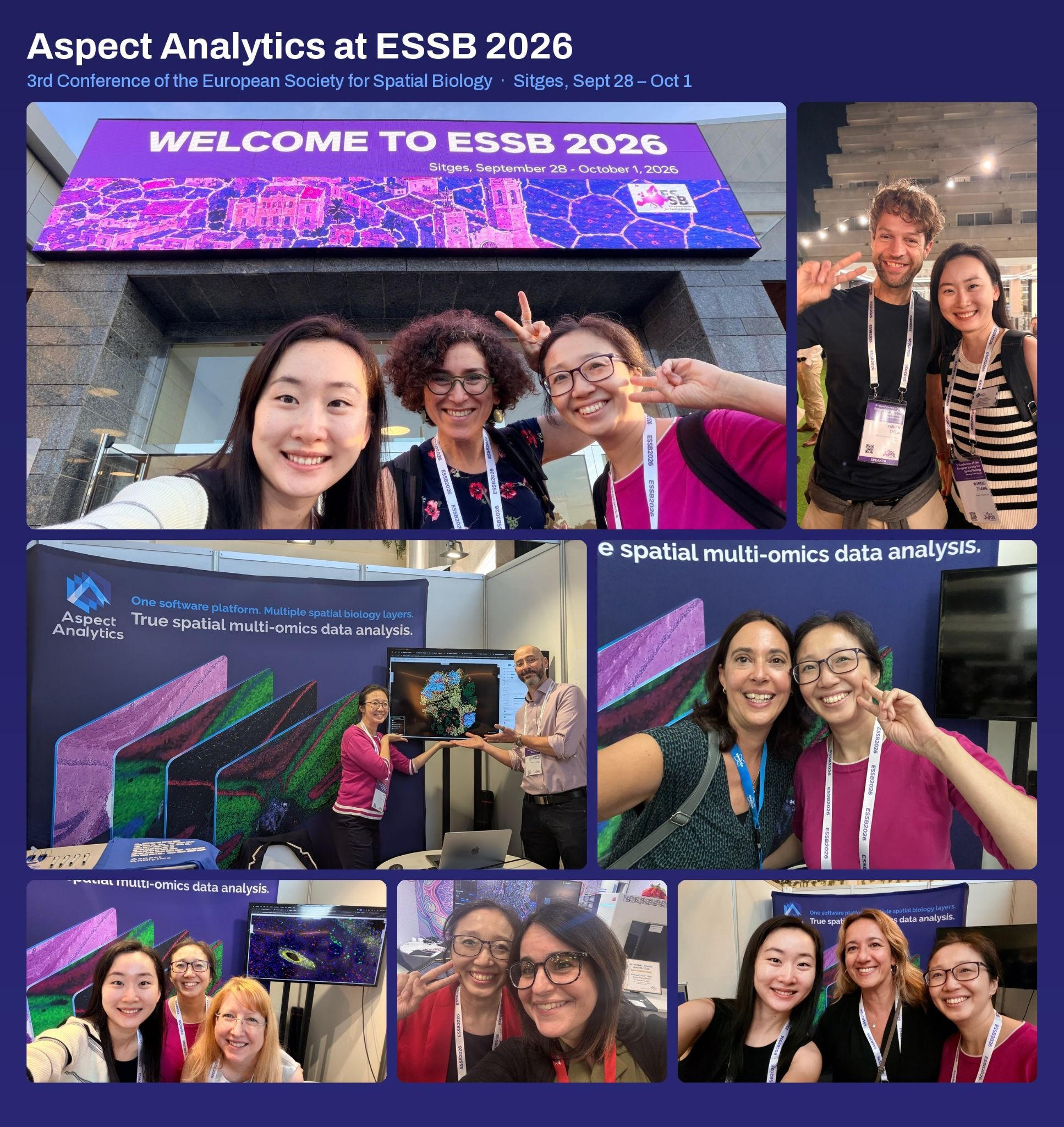
The scientific program at ESSB 2026 was organized into six sessions, each inspired by an artist from Spanish heritage: Cancer and the TME (Picasso), Spatial Immunology (Mallo), Computational Spatial Biology (Miró), Novel Applications (Dalí), Spatial Medicine (Ramón y Cajal), and New Layers of Biology (Gaudí). The keynotes pointed to where computation in spatial biology is heading: Fabian Theis (Technical University of Munich) spoke about moving from describing cellular systems to predicting and guiding interventions by linking single-cell perturbations with spatial context, while Garry Nolan (Stanford University) explored how large language models can help uncover patterns in the tumor–immune interface. Aspect Analytics and Weave® addresses the themes of ESSB 2026 by being a dedicated software for spatial biology data analysis and integration. By providing a data management platform, enabling integration of multimodal spatial data, supporting cellular neighborhood analysis of spatial data, and more, Weave gives the computational and AI approaches presented by Theis and Nolan well-structured, cell-resolved spatial data to build on.
The Aspect Analytics ESSB 2026 posters fit the program’s trajectory from technology and data analysis to spatial medicine and AI-driven prediction. In both posters, the value comes from bringing multiple spatial modalities into a shared coordinate frame, so that cell types, neighborhoods, and niches can be interpreted in their histological context.
Investigation of cellular neighborhoods and immune checkpoint inhibition in triple-negative breast cancer
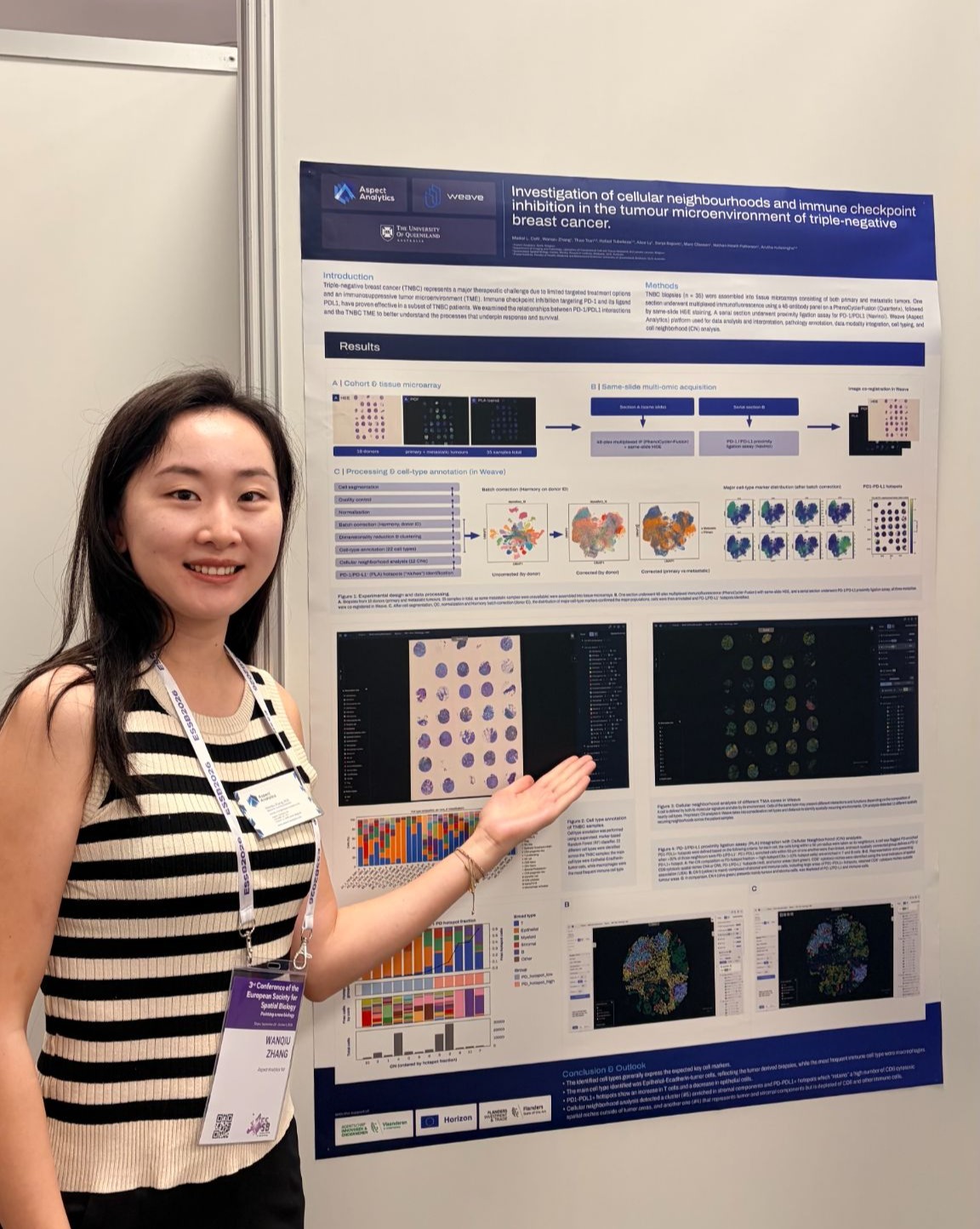
Together with researchers from the University of Queensland, this study examined how PD-1/PD-L1 inhibition relates to the immunosuppressive tumor microenvironment in triple-negative breast cancer (TNBC). A tissue microarray of 35 biopsies was profiled with a 48-antibody multiplexed immunofluorescence panel (PhenoCycler-Fusion, Quanterix), H&E, and a PD-1/PD-L1 proximity ligation assay (Navinci). Weave® handled dataset integration, pathology annotation, cell typing, and cell neighborhood analysis. We identified 22 cell types and 12 recurring neighborhoods. PD1-PDL1+ hotspots showed more T cells and fewer epithelial cells, and one stroma-rich neighborhood retained CD8 cytotoxic niches outside tumor areas.
Integrated Spatial Multiomic Mapping of Tumor-Immune Niches Across Human Tissue Sections
In collaboration with Standard BioTools, this study explored spatially-resolved multimodal profiling of clear cell renal cell carcinoma (ccRCC) tumor microenvironment using Weave. ccRCC sections were profiled with Xenium spatial transcriptomics (10x Genomics), and Imaging Mass Cytometry spatial proteomics (Standard BioTools), then co-registered and integrated at the cellular level. Key findings showed complementary value of transcriptomics and proteomics for cell typing, and identified distinct tumor microenvironments characterized by metabolic suppression, vascularized immune infiltration, and hypoxic immune-evasive regions, and transcript–protein divergence that underscores the value of protein-level validation.
Have questions about any of these studies, want to learn more about Weave®, or want to discuss your own spatial multi-omics projects? Contact our team